
Kakeibo; Wealth Starts by Plugging the Holes in the Bucket
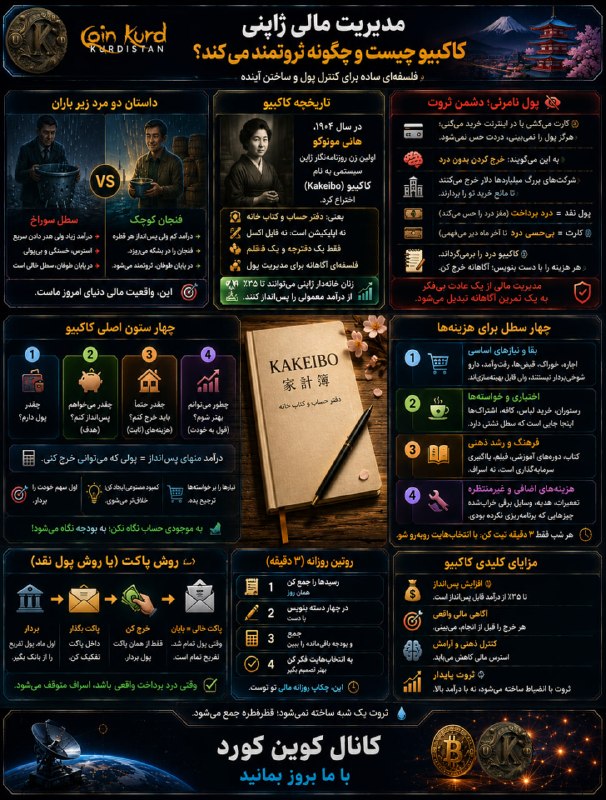
Kakeibo; Wealth Starts by Plugging the Holes in the Bucket
🌧 Wealth doesn't start with "having more"; it starts with "wasting less"
Many assume the path to getting rich is increasing income; but if financial habits are leaky, higher income simply speeds up the leak of money. A large leaky bucket remains empty at the end of the rain, but a small, intact cup can fill up drop by drop. The issue isn't the size of income; it's the gap between income and consumption.
💡 Kakeibo; Transforming Invisible Money into a Conscious Choice
Kakeibo, the traditional Japanese method of recording income and expenses, is built on a simple principle: money that isn't seen and recorded is simply spent. Digital payment has lowered the friction of buying and reduced the "pain of paying"; manually writing down expenses brings this friction back to your mind. When you manually record an expense, it's no longer just a number on a screen; it's a part of your life's time and energy.
At the start of every month, raise four questions: How much do I have? How much do I want to set aside? What are my essential expenses? And how will I do better this month? Then reverse the equation: Income − Savings = Spendable Budget. First separate your future share, then live with the remainder.
📊 Record each expense in four categories: Basic needs; Wants and entertainment; Growth and culture; and Unforeseen expenses. Daily recording takes just a few minutes. The goal isn't blame; it's building real data of your own behavior. The budget should be the criterion for decision, not the account balance; because the bank balance still includes rent, bills, and future savings.
A cash envelope or a separate account for discretionary spending creates a physical boundary: when the entertainment share is finished, spending is done. This limitation turns self-control from a wish into a reality. Also, create a pause for non-essential purchases: record the desire and wait 30 days. If after that it's still valuable, it's a conscious purchase; if the urge has disappeared, you've saved your money without buying.
🔥 Kakeibo isn't just about cutting expenses; it's about changing the relationship with objects. Taking care of belongings, repairing them, and using them longer reduces the constant desire for a "newer version". Respecting what you have is the opposite of consumerism; because it shifts satisfaction from the next purchase to the proper maintenance of what you own.
At the end of the month, do a Hansi: compare reality with the budget and ask where and why you deviated. If stress causes more buying, the issue isn't just money; find the behavioral trigger and build a substitute. This feedback loop forms Kaizen: every month one small mistake less, one better decision more.
🧠 Wealth isn't a number; it's a ratio and ultimately a form of freedom. Someone with high income who consumes all of it may have less financial freedom than someone with lower income and regular savings. Every unit of money you save buys a part of your future time from compulsion. Therefore, the ultimate question is not "how much do I earn?" but rather: "what does my money serve?"
Try it for seven days: manually record every rial/penny at that exact moment; then at the end of the week sum up the expenses and mark duplicate and non-essential items. Awareness is the first patch. After that, discipline closes the leak. Wealth is built not from luck, but from aligning money with the true values of life.
#Kakeibo #Financial_Management #Wealth #Financial_Freedom
Persian original · View this post on Telegram ↗ · Open in the archive · 💬 Discuss in the Coin_Kurd Telegram group · Educational, not financial advice.